
Civil and criminal liability in an elevator company: the hidden cost of a missed inspection
- Category:
- Regulations
- Date:
- August 14, 2026
- Reading:
- 3 min
An ordinary day in the office. Calls pile up, a crew is out on an emergency with a person trapped, a client wants an explanation for a late quote. In that continuous flow, a cell on a spreadsheet or a paper card in a filing cabinet goes unnoticed. It is the date of a biennial inspection under DPR 162/99, or the expiry of a maintainer's fitness medical visit.
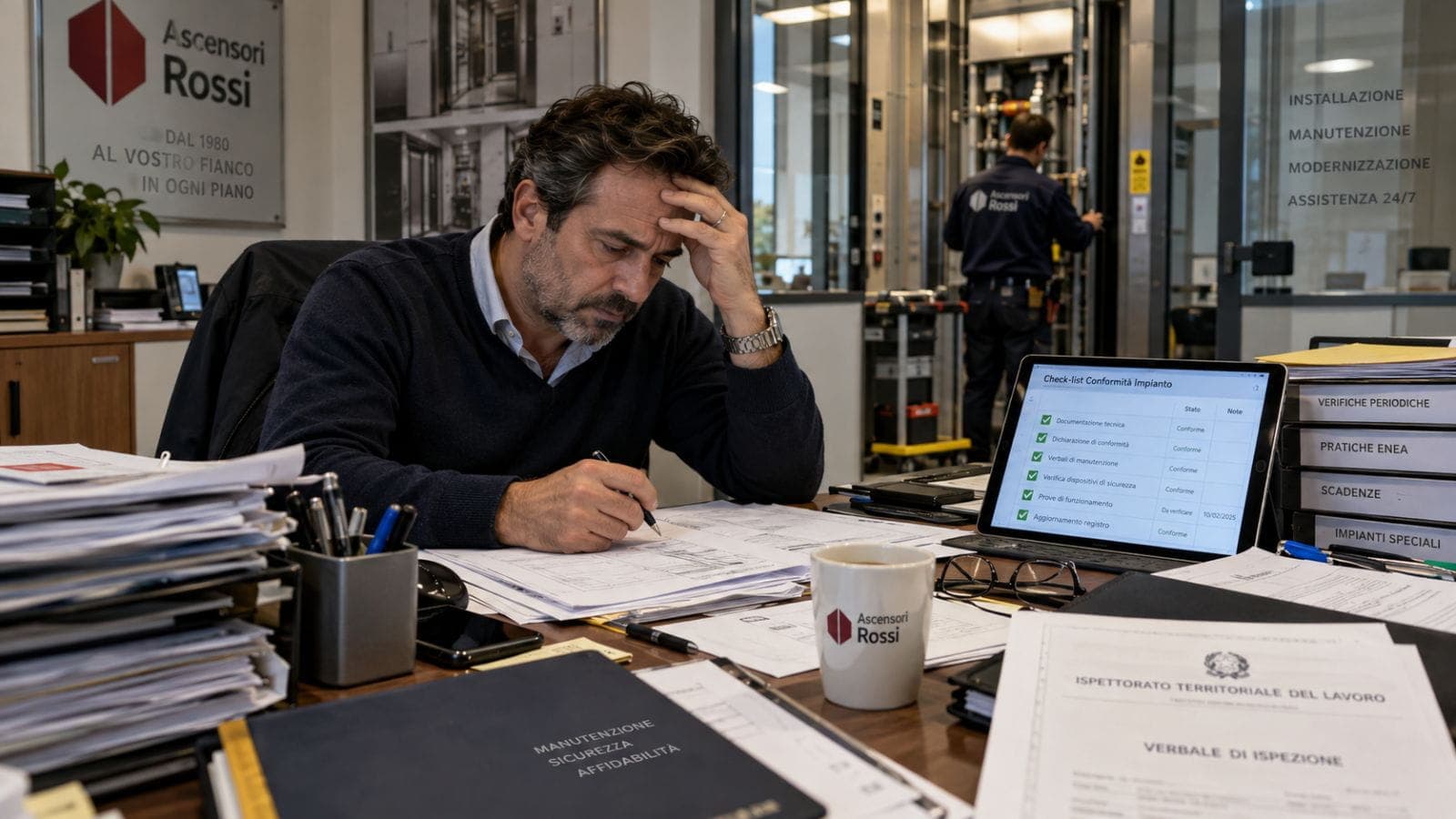
What happens when the check is not done in time and something unexpected occurs on that installation?
For anyone running an elevator installation and maintenance company, regulatory compliance (Legislative Decree 81/08 and DPR 162/99) is not an administrative formality. It is a thin line between continuity of the business and the owner's personal civil and criminal liability.
The trap of memory and fragmented systems
Most disputes start from fragmented information. When licence dates, periodic inspection deadlines, PPE handover records and course certificates (work at height, confined spaces, PES/PAV) live in separate archives, the risk of a miss grows with the number of installations under management.
Relying on individual memory or manual diaries creates a single point of failure. The mental load of staying in control is huge, and the price of a sideways error hits company assets and reputation directly.
Locking in compliance before the inspection
The only way to remove inspection anxiety is to reverse the flow: the office should not have to remember the deadline; the system should flag the action in advance.
A central view where the elevator's identity card and the site personnel record are linked in real time turns bureaucracy from stress into a protective shield. When every report is signed digitally, stored in the cloud and retrievable in three seconds, compliance stops being a cost and becomes operational certainty.
If an inspector or an expert walked into your office today asking for the fitness record of the last maintainer who left this morning, or for certainty that a biennial inspection is booked in three weeks, how long would it take you to find them? And above all: would you be one hundred percent sure they are valid?
Related articles
Trends
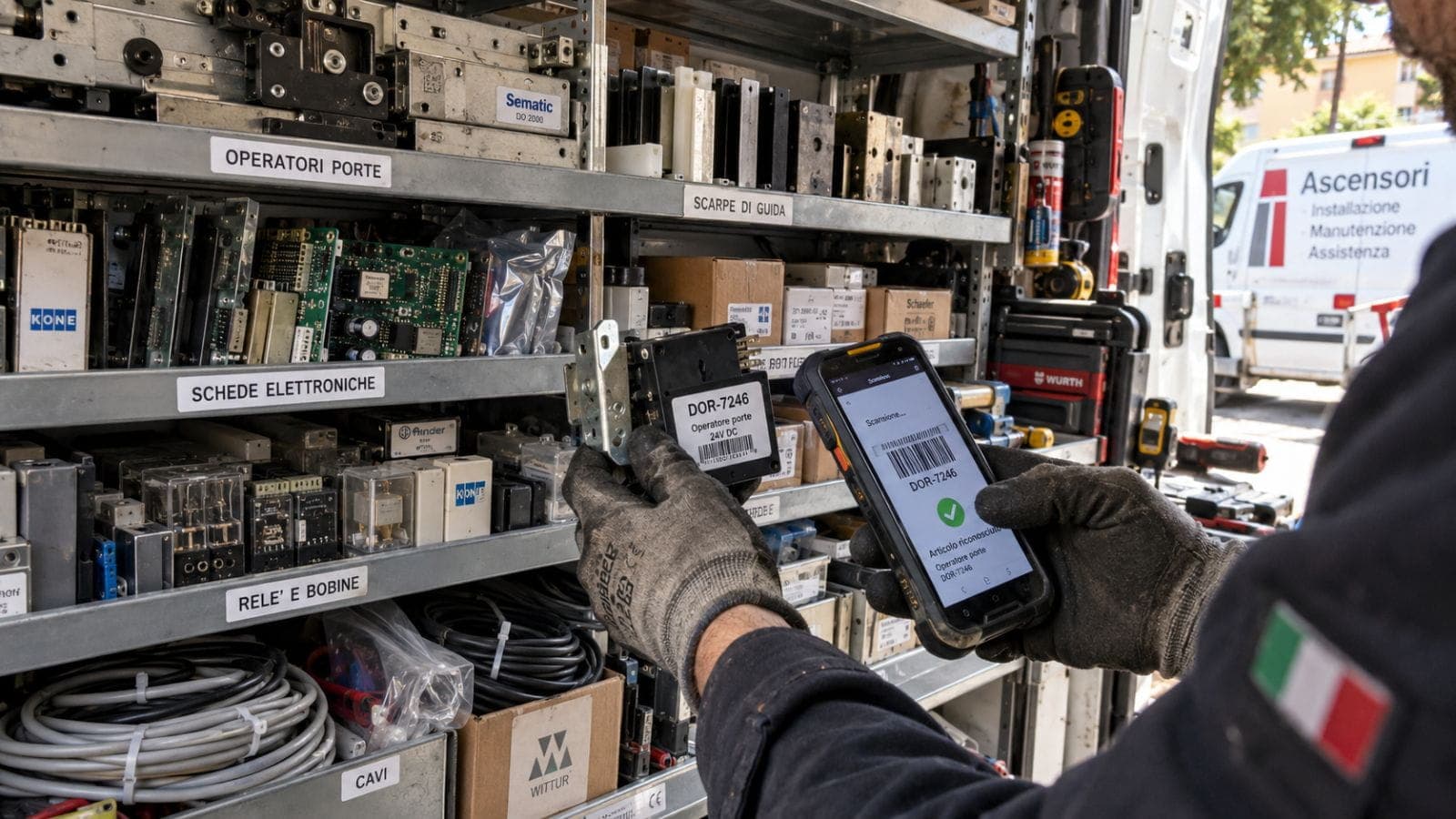
The invisible margin leak: what an untracked spare on the van really costs you
Workload is high, contracts are honoured, yet margin erodes. The leak often sits between central warehouse and vans, on a spare never linked to the installation.
Read more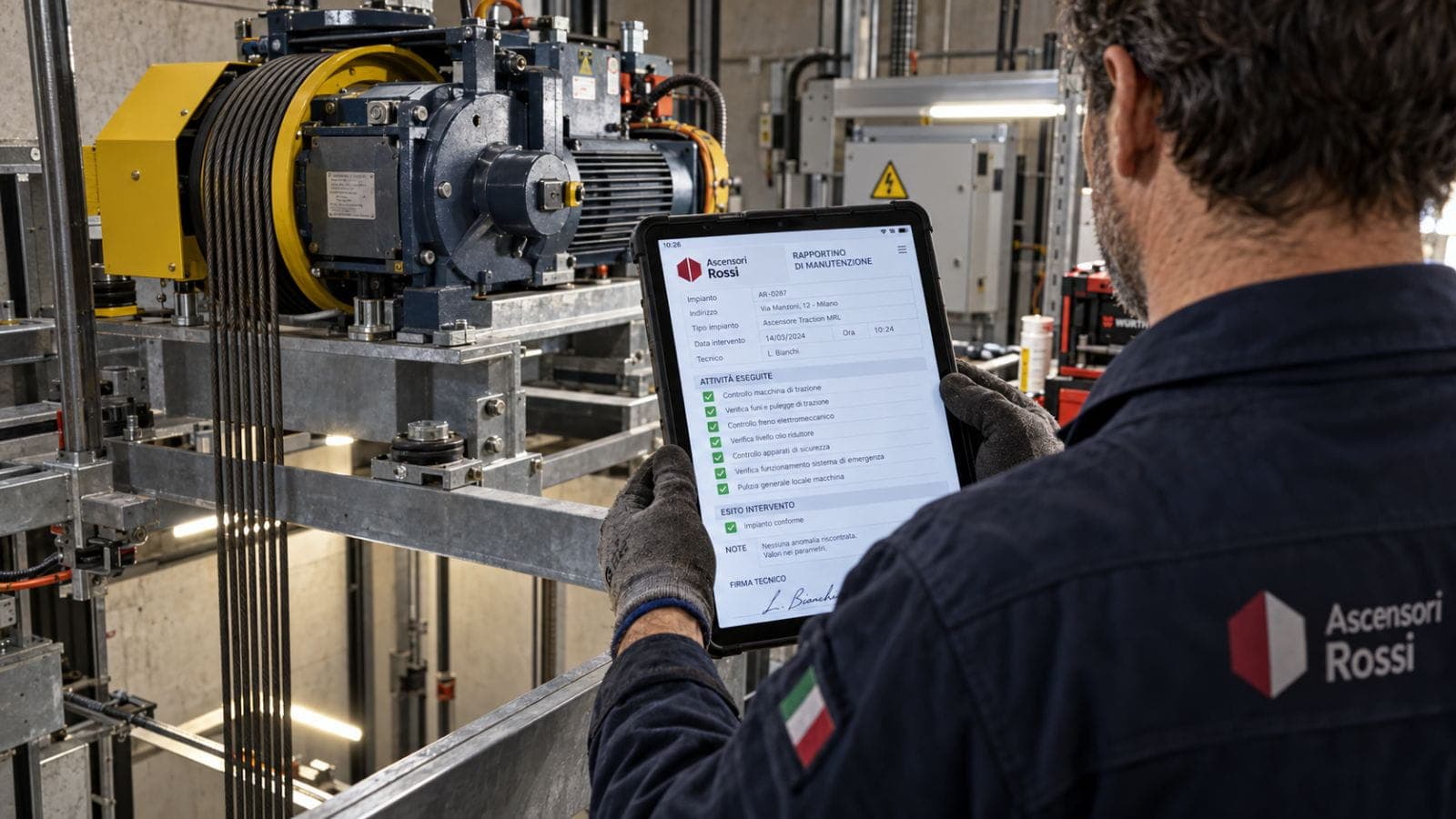
Innovation
No more loose sheets in the van: how a digital job report improves the technician's work
Handwritten reports, greasy signatures and handing papers in at the office slow the field and force admin to retype. Installation history belongs on the tablet, not on the seats.
Read more
Innovation
Installation sites and major modernisations: how to stop hidden costs eating the profit
New installations and major upgrades are the highest-value jobs, and the highest financial risk. Without a shared view of hours, equipment and fleet, invisible costs pile up before handover.
Read more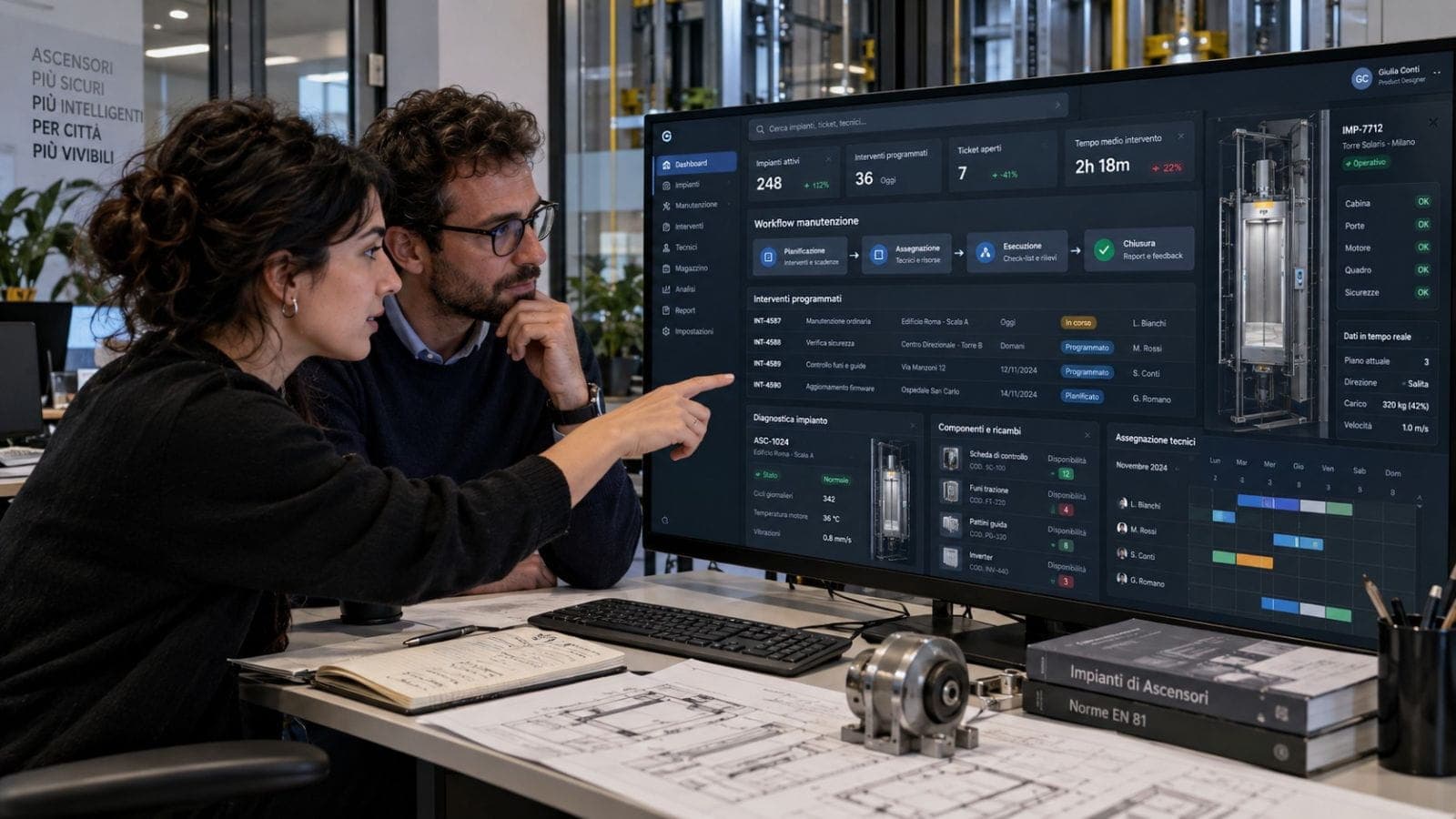
Elevops
Why a "standard" ERP will never work for an elevator company (and the made-to-measure answer)
Generic software imposes abstract flows and keeps Excel alive. Lifts need rules, 24/7 emergencies and serial numbers: if the system is not born around those flows, it becomes an obstacle.
Read more
Innovation
The late-quote paradox: why response speed decides who wins the contract
In maintenance, extraordinary repair or modernisation, competition is not only about price. It is about response time, without gut-feel estimates.
Read more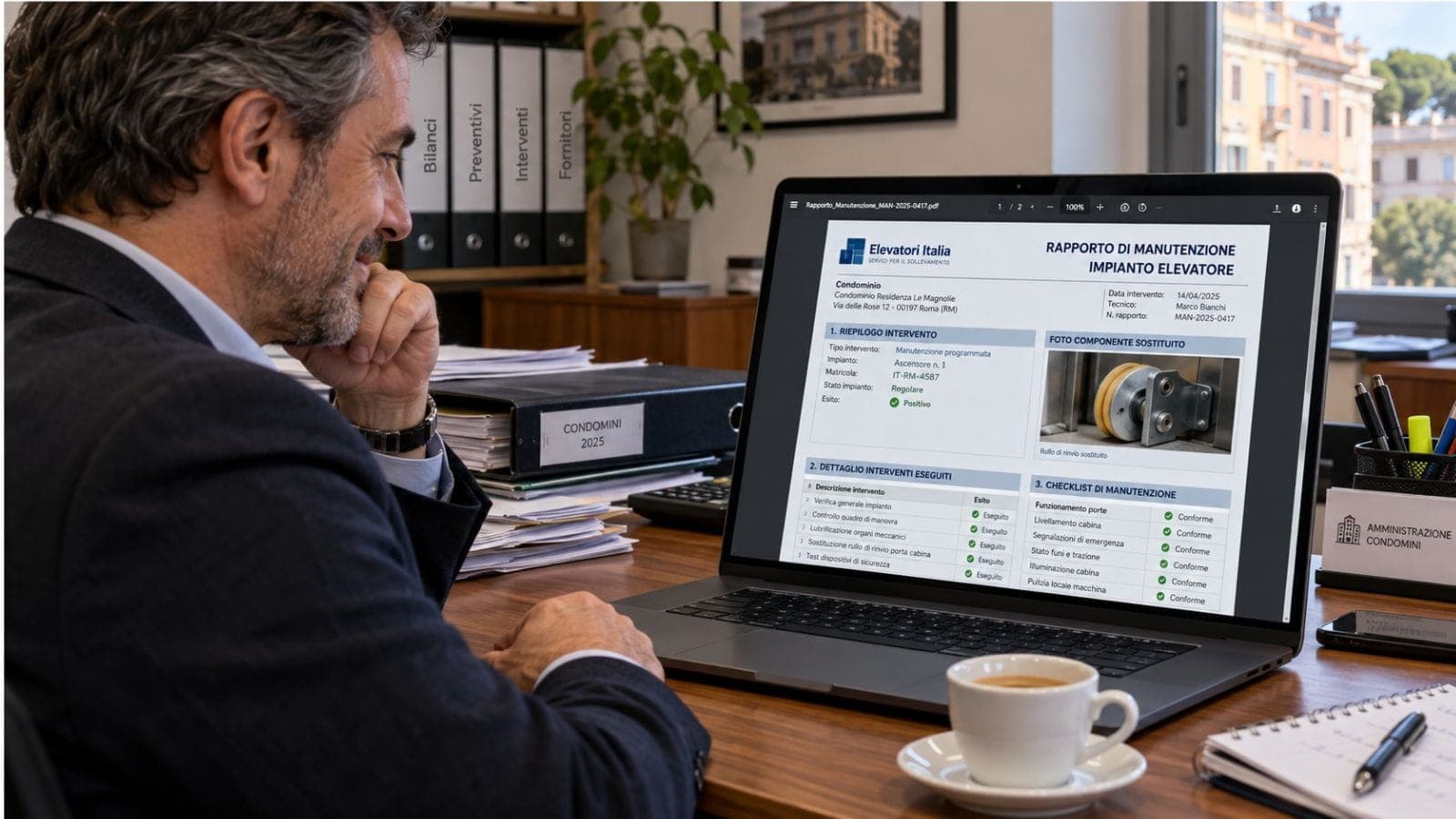
Trends
Transparency and retention: how digital reporting changes the relationship with building managers
A building manager no longer wants only a technician when the lift stops. They want proof of maintenance, clear documents and a partner who can stand in front of the assembly.
Read more