
Installation sites and major modernisations: how to stop hidden costs eating the profit
- Category:
- Innovation
- Date:
- September 11, 2026
- Reading:
- 2 min
New-installation sites and major modernisations are an elevator company's highest-value jobs, and also the highest risk of financial drift. Unlike ordinary maintenance, a site involves logistics, equipment coordination, tight operational deadlines and management of the company vehicle fleet.
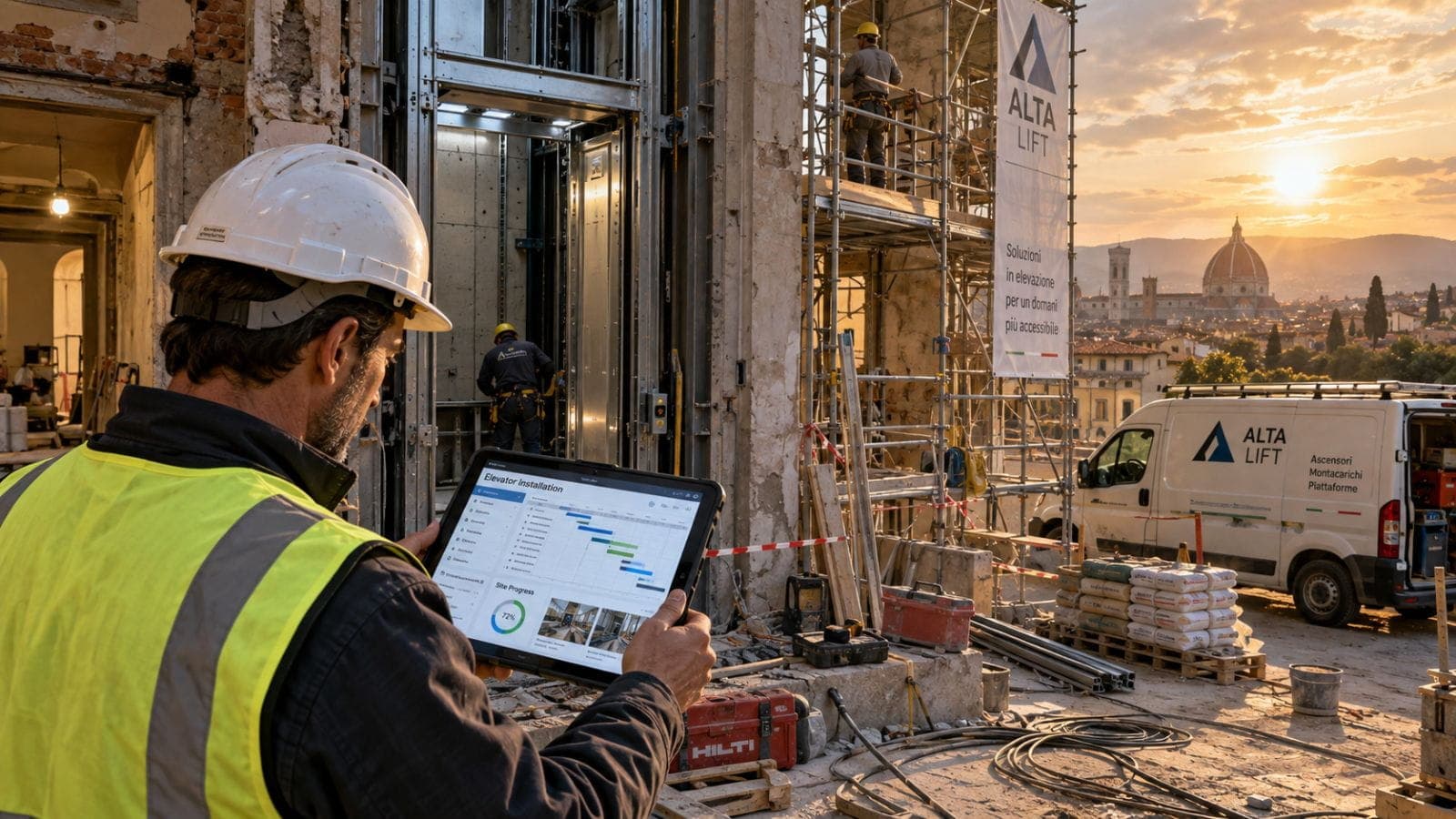
When work progress and the availability of tools in the field are monitored in disconnected ways, delivery delays and invisible costs accumulate quickly.
Resources scattered between office and site
What are the main causes that cut the margin on a modernisation job?
- Untracked equipment and machinery: valuable tools assigned to crews with no clear register, leading to work stoppages while material is hunted down, or to duplicate purchases.
- No control of hours worked: difficulty reporting exactly the man-hours spent on each site against those planned in the programme.
- Passive fleet management: vans blocked for inspections, services or unplanned paperwork deadlines, which freeze crew logistics.
A digital control room for work progress
For a job to keep the planned profitability, company management and the site lead must share the same operational visibility in real time.
A central system lets you follow every site phase through a clear plan of daily tasks, an equipment inventory with a diary of periodic checks, and tracking of the vehicle fleet. Knowing exactly who is doing what, which tools are in use on each site and where the programme stands removes hidden costs and supports on-time delivery within the agreed times and budgets.
If today you had to check the exact economic margin of that installation site opened three weeks ago, could you see it in one click, or would you wait for administration to assemble invoices, timesheets and delivery notes at the end of the job?
Related articles
Innovation
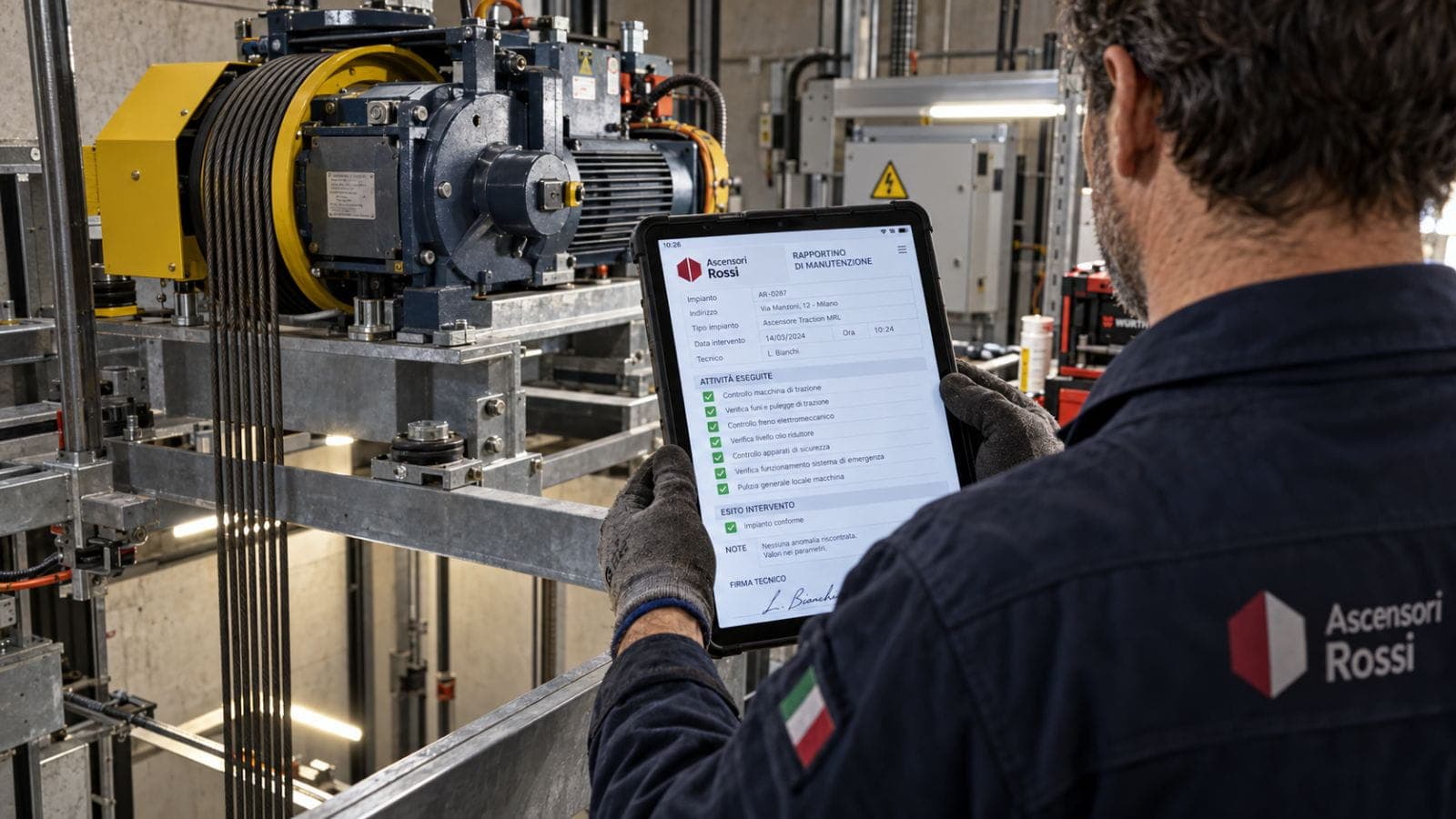
No more loose sheets in the van: how a digital job report improves the technician's work
Handwritten reports, greasy signatures and handing papers in at the office slow the field and force admin to retype. Installation history belongs on the tablet, not on the seats.
Read more
Innovation
The late-quote paradox: why response speed decides who wins the contract
In maintenance, extraordinary repair or modernisation, competition is not only about price. It is about response time, without gut-feel estimates.
Read more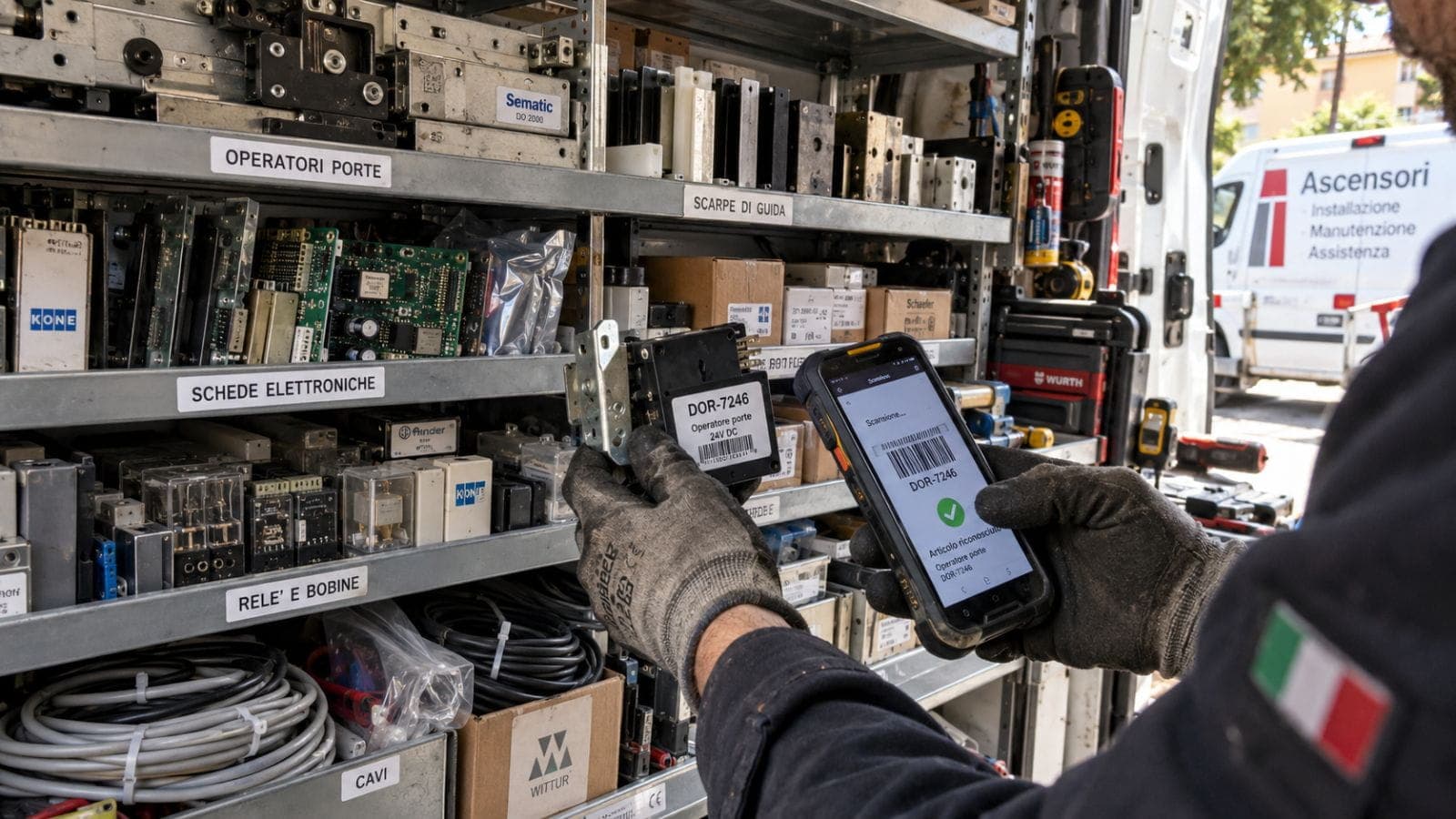
Trends
The invisible margin leak: what an untracked spare on the van really costs you
Workload is high, contracts are honoured, yet margin erodes. The leak often sits between central warehouse and vans, on a spare never linked to the installation.
Read more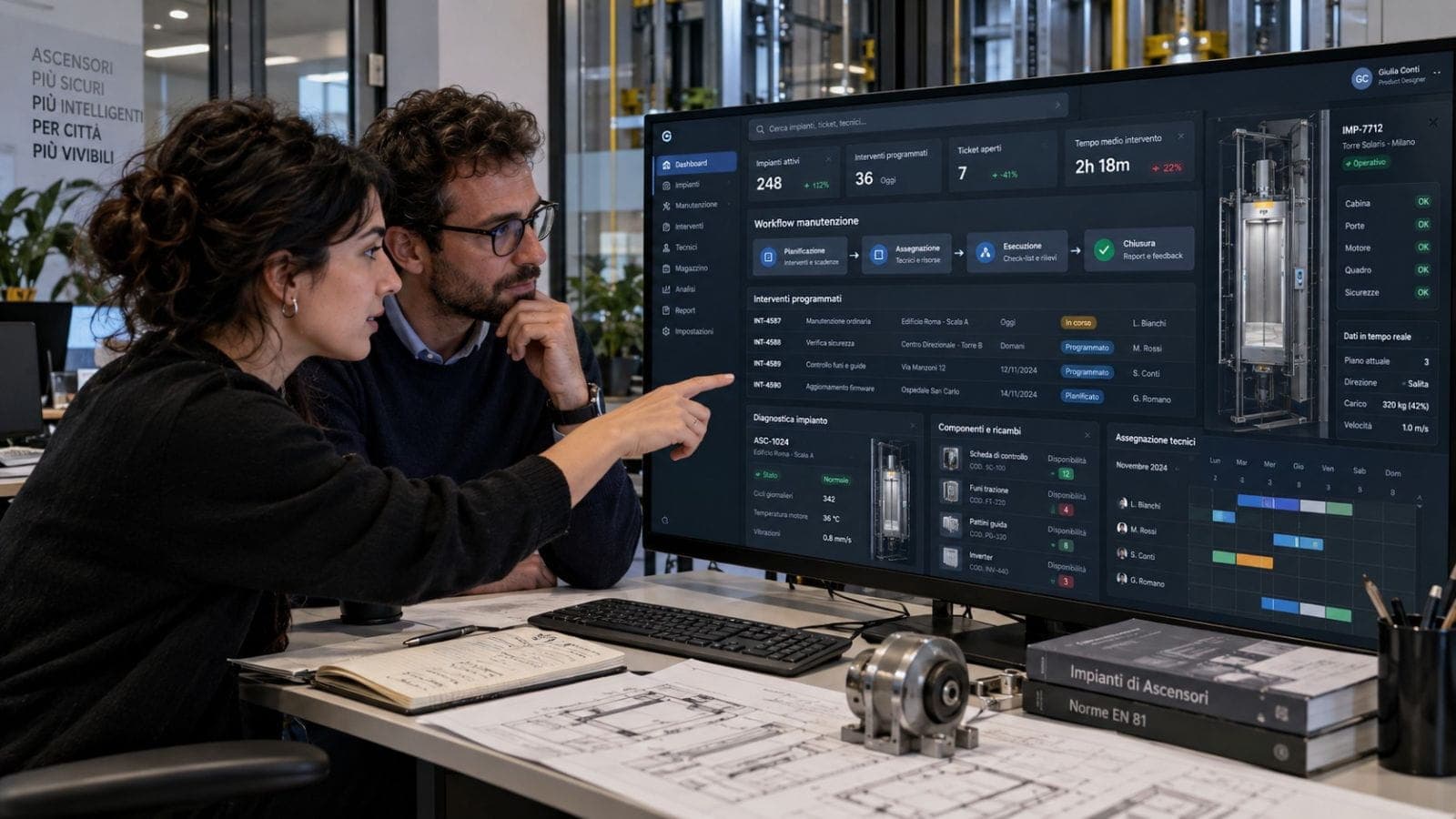
Elevops
Why a "standard" ERP will never work for an elevator company (and the made-to-measure answer)
Generic software imposes abstract flows and keeps Excel alive. Lifts need rules, 24/7 emergencies and serial numbers: if the system is not born around those flows, it becomes an obstacle.
Read more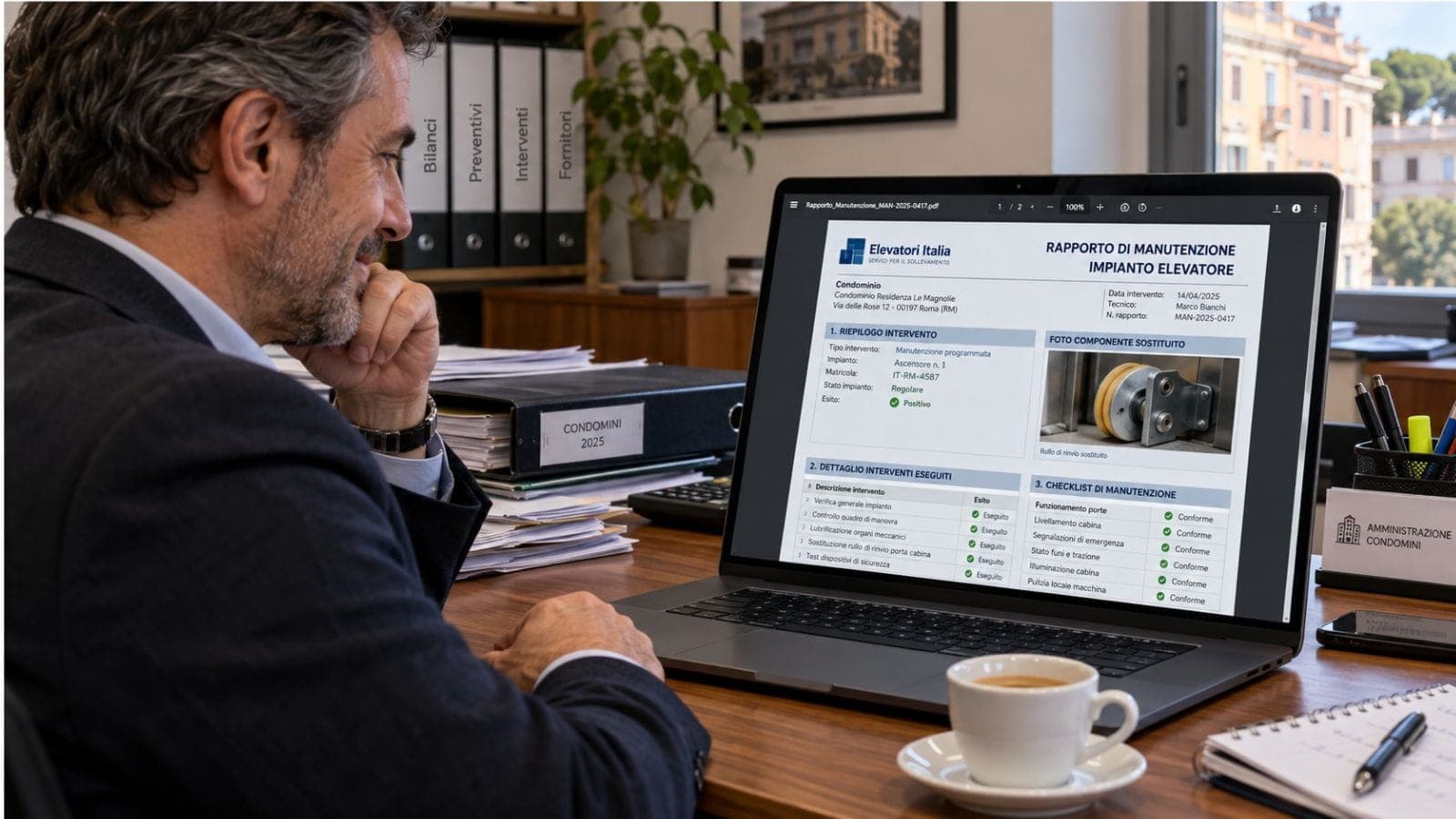
Trends
Transparency and retention: how digital reporting changes the relationship with building managers
A building manager no longer wants only a technician when the lift stops. They want proof of maintenance, clear documents and a partner who can stand in front of the assembly.
Read more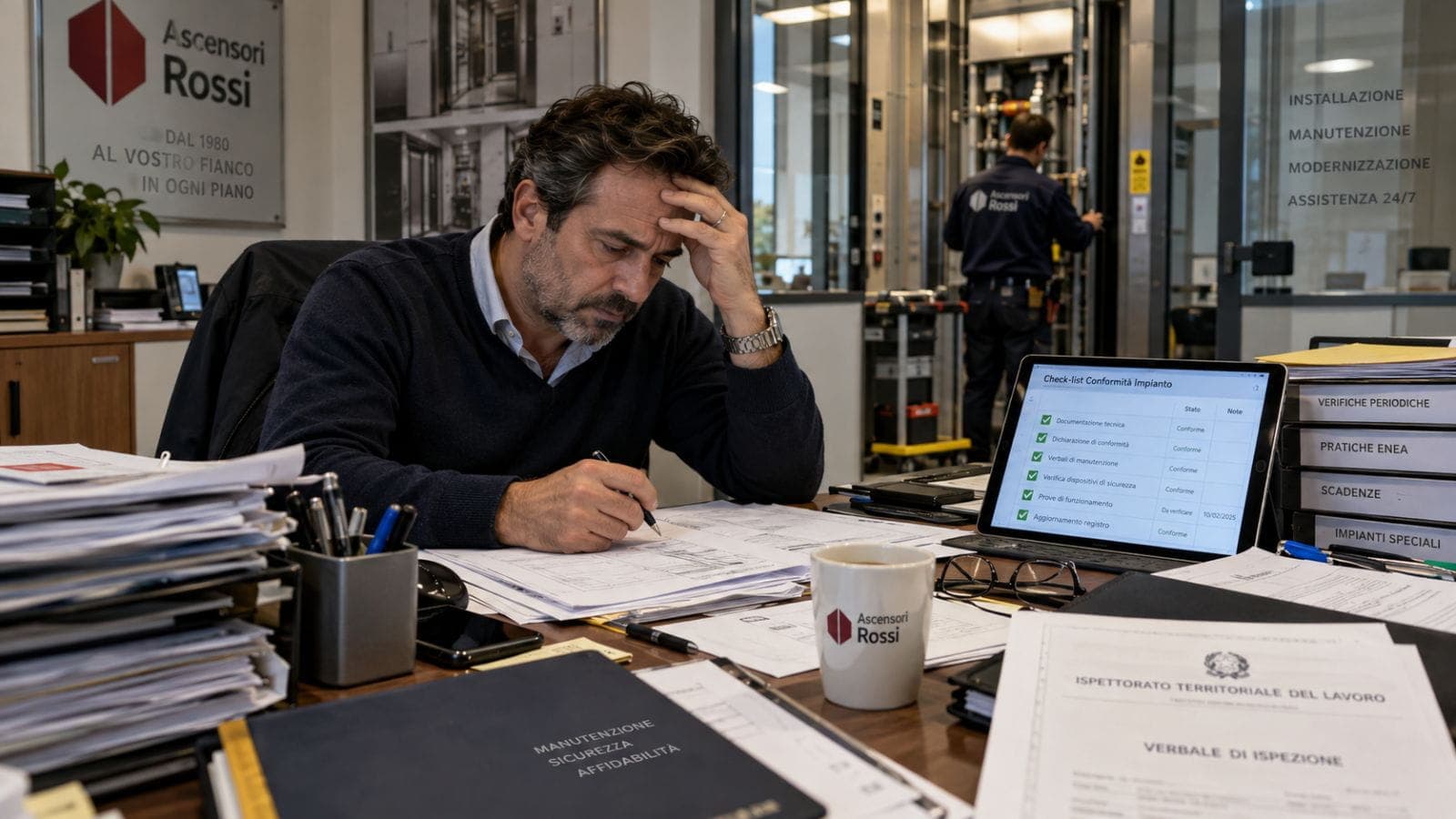
Regulations
Civil and criminal liability in an elevator company: the hidden cost of a missed inspection
A biennial inspection or a medical check left on a spreadsheet is not paperwork. For the owner it is the line between staying in business and personal civil and criminal liability.
Read more